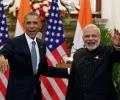
About 4 GW of new nuclear power capacity is under construction in India

India is finally set to give shape to its futuristic smart cities - world-class, self-sustainable habitats with minimal pollution levels, maximum recycling, optimised energy supplies and efficient public transportation.
Power equipment supplier Bharat Heavy Electricals Ltd plans five joint ventures in the nuclear sector and locomotive manufacturing. The company has decided to invest Rs 1,000 crore in a castings and forgings joint venture, Chairman and Managing Director K Ravi Kumar said.

Tokyo -- the songs Japan, Love In Tokyo and Sayonara from the 1966 Hindi film automatically pop up in the mind -- is buzzing and crowded like any other metropolis, discovers Deepa Gahlot. The modern apartment blocks are built cheek by jowl, so close together that one can open the window and borrow sugar from the neighbour in the next building. One of the fears of the Indian traveller is the unavailability of vegetarian food. Every city and town in Japan has an array of Indian restaurants that serve every variety of cuisine, right from Gujarati to Punjabi to Andhra and Kerala meals.
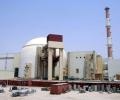
The contract would give a big boost to India's $150 billion nuclear power programme, and a broader push to curb greenhouse gas emissions.
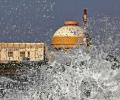
This would make India the world's second-biggest nuclear energy market after China
'At a time when the entire India-US relationship needs to be defined by President Trump and Prime Minister Modi, a fresh look at the liability issue has become urgent,' says Ambassador T P Sreenivasan, former Governor for India at the IAEA.

A pact between the NPCIL and Westinghouse to build six power reactors in Andhra Pradesh is unlikely to be signed.

The annual summit between India and Japan on Saturday will seek to forge greater bilateral trade and investment ties, with Japanese Prime Minister Shinzo Abe coming with a high-powered business delegation.
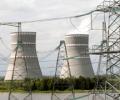
Under a 2010 nuclear liability law, nuclear equipment suppliers are liable for damages from an accident, which companies say is a sharp deviation from international norms

India is expected to strongly push for a bilateral totalisation agreement with the US during President Barack Obama's visit later this month.

While the two high-profile exits in pharmaceutical and telecom have raised concerns over regulatory hassles in the country, Japanese investors are still keen to tap into India's consumer growth story and many more merger and acquisition deals are in the offing in this space.

There are many reasons for Japan to turn a deaf ear to its anti-nuclear lobby and concentrate on its geo-strategic imperatives to sign the nuclear deal with India, says Debalina Ghoshal.

The Indo-Japanese nuclear deal may not come easy considering India's Civil Nuclear Liability Act provisions which had earlier put off suppliers like General Electric, says Debalina Ghoshal.
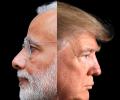
Here's why Rajeev Srinivasan believes there will be nothing particularly positive about the prime minister's US visit.
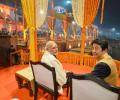
'Modi and Abe are working seriously for India-Japan bonhomie to grow stronger.' 'It is a win-win situation for both countries and the future look promising,' says Rajaram Panda, the Indian Council for Cultural Relations India Chair Visiting Professor at Reitaku University, Japan.

The government must justify why we need to buy foreign reactors when we have developed up to 700 MWe unit-size pressurised heavy water reactors, a design which can be easily extended to 900 to 1000 MWe unit size. Why can't the 'Make in India' philosophy apply to indigenous nuclear reactors, more than 18 of which have been designed, built, and being operated by Indian engineers, asks Dr A Gopalakrishnan.
